

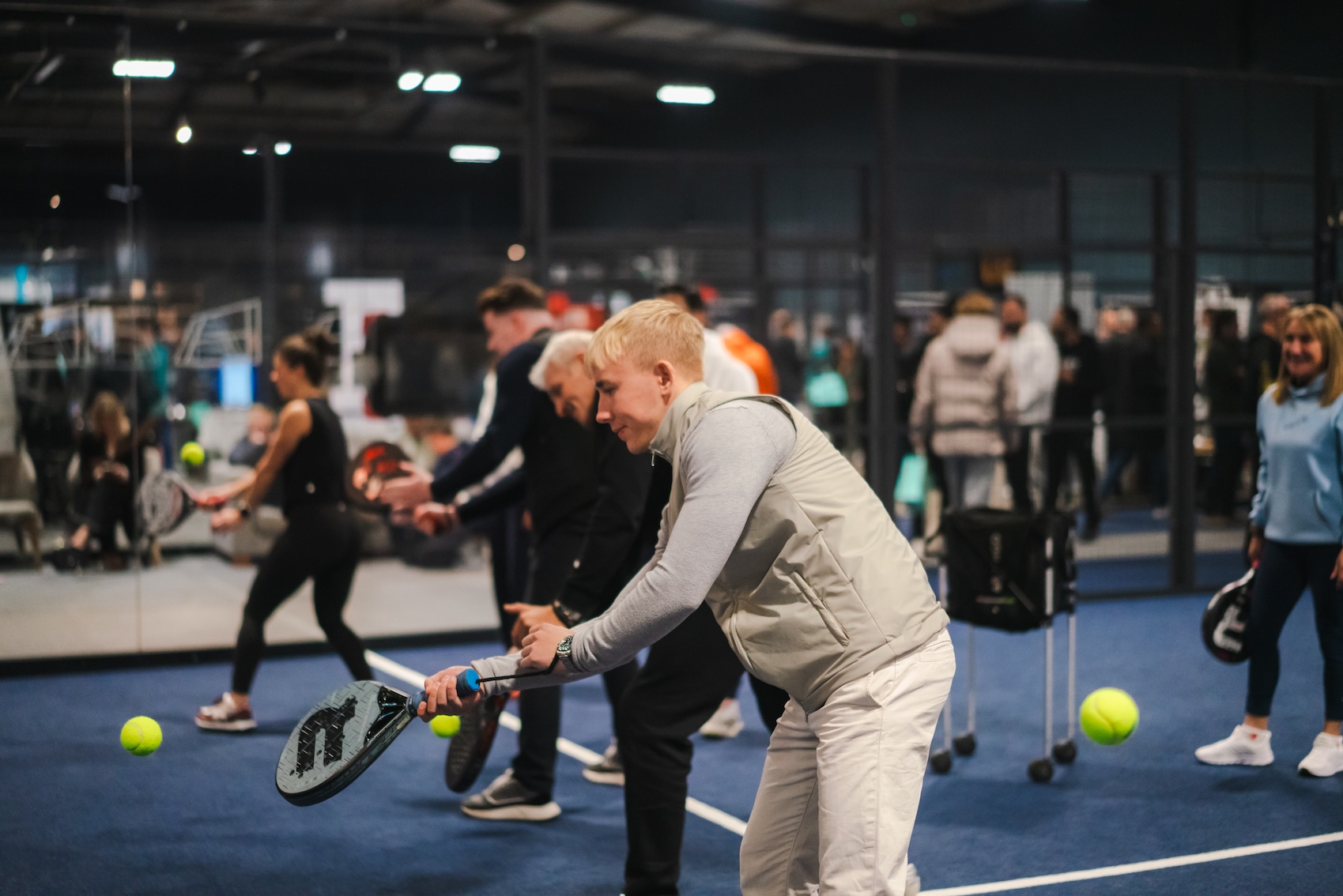
Why padel is beginner‑friendly
- Smaller court and doubles format – Results in less running and shared court coverage, so rallies start quickly and newcomers feel successful fast.
- Underarm serve and solid racket - Reduces early technical barriers compared with an overarm tennis serve and strung racket.
- Walls are part of play, not a penalty - Learning to use rebounds adds tactical variety but doesn’t block early enjoyment.
- Equipment – Some clubs lend rackets and balls for first sessions.
Practical first steps
- Book a taster or beginner clinic — Many UK clubs run coached beginner sessions and provide kit.
- Try an Americano or mixer - After an initial lesson to meet players and practise in low‑pressure games.
- Record one short rally - Review positioning and footwork with a coach by recording footage on your phone.
- Aim for 1x coached session + 1x social match per week - As your interest increases, this is the best approach to see steady improvement.
Risks, limits and trade‑offs
- Wall play and tactical depth become challenging later — Early ease doesn’t remove the need for practice to reach advanced levels.
- Level mismatch – Can be common in socials. State your experience when joining sessions.
- Availability – This varies by town. Big cities have more beginner programmes than smaller towns.
Tailored next step for you
- Book a beginner taster at your nearest club this week and join the club’s WhatsApp or Playtomic social to find casual partners. Many venues in the UK run free or low‑cost intro sessions and lend rackets.








.avif)




.jpg)
